
From the Russian Empire to the American West: The Shanks

Updated: Mar 30
A journey from the Dakota prairie to Portland through the life of Lipp Shank.

The Shank Family Leaves the Old World
In the summer of 1882, a small group of Russian Jewish immigrants stepped onto the open prairie north of Bismarck in the Dakota Territory. They had crossed an ocean to escape persecution in the Russian Empire, and now they stood in a place so wide and empty it must have felt like the edge of the world. Its founders believed the immigrants who came there would prove something important: that Jewish refugees from Russia could become American farmers. At a time of public skepticism and doubts about whether Jewish arrivals could support themselves outside of urban the colony, was meant to answer those criticisms directly by showing they could work the land, sustain themselves, and thrive on the American frontier.

Among the settlers was Israel Shank, a forty-two-year-old immigrant who had recently arrived in the United States with his family.
To understand how the Shanks ended up there, it helps to begin in the Russian Empire, where Israel and his wife Mary Manuel, called “Mollie” by those who loved her, had built their family. Israel had been born in 1840 in a region under Russian control at the time. Mollie was only a few years younger.
Before their home filled with children, Israel and Mollie were building a life in a place where restrictions shaped daily life and the threat of violence was never far from the surface.
Over time, that life expanded into a growing family: Louis, or “Lipp,” the oldest, followed by Mike, then their sister Mary, and years later, the youngest, Rachael, who they called "Rae."
By the early 1880s, conditions for Jews in Eastern Europe were worsening. Pogroms erupted and restrictions tightened. Families who had lived for generations in the same towns suddenly faced a stark decision: stay and endure an uncertain future or leave everything behind and start again somewhere else.
For the Shank family, the answer was America.

Crossing an Ocean
In the early 1880s, the Shank family joined the great migration of Eastern European Jews leaving the Russian Empire in search of safety and opportunity. They departed from Liverpool and crossed the Atlantic to the United States, arriving through Pennsylvania.
Their journey likely began in a small town known as Plotzk. From there they would have made their way across Europe to a port, joining thousands of other Jewish families leaving the Russian Empire in the early 1880s.
In June of 1882, a local newspaper described the arrival of Russian Jewish refugees in the region, noting that they had been settled north of Bismarck, where they began establishing a village. The group, one of many arriving during that time, had been guided by Julius Austrian, an agent working with a relief organization to help families resettle.
The article also reflected what had driven so many to leave, describing an exodus of Jews “oppressed beyond endurance.”
When their ship arrived in July 1882, it carried hundreds of passengers, including large numbers of Russian Jews bound for the American West. Contemporary newspaper accounts noted that many arrived with very little, and that aid societies in England had provided clothing and basic necessities before departure. Small signs of how uncertain the journey had been even before the ship set sail.
For many immigrants, arrival in America meant settling in crowded eastern cities like New York or Philadelphia. Tenement buildings and busy markets quickly became the center of Jewish immigrant life.
But the Shank family’s path would be very different.
Instead of remaining in the cities of the East Coast, they continued west toward a place that must have seemed almost unimaginable: the open prairie of the Dakota Territory. There, a bold social experiment was unfolding.
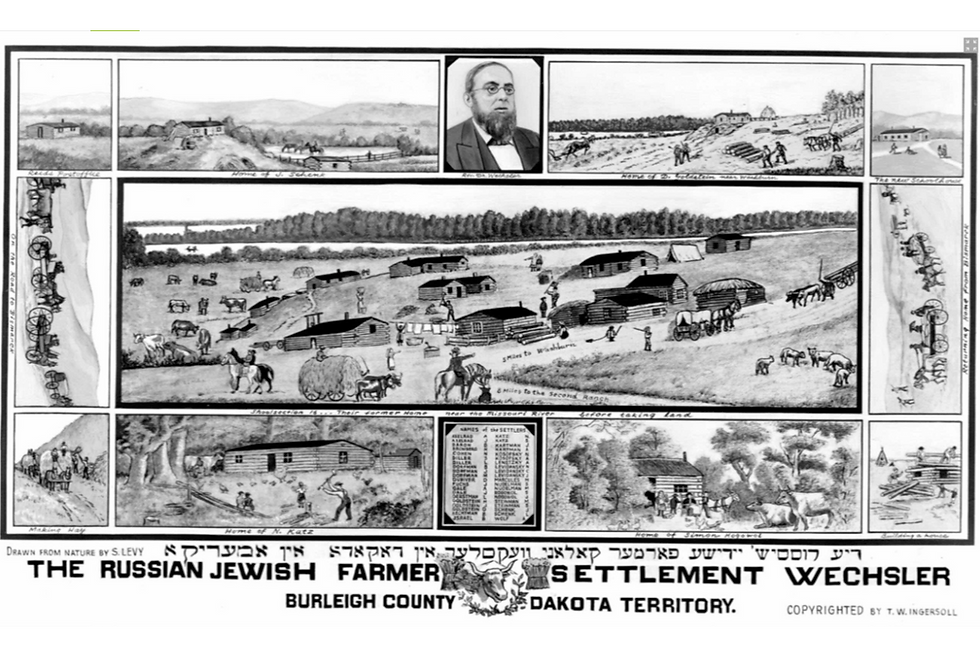
The Painted Woods Colony
North of Bismarck, along the Missouri River, Jewish leaders and reformers established a farming colony known as Painted Woods — a name inspired by the cottonwood groves along the river, in a region that had long been home to the Sioux. Families were encouraged to settle there, claim land, and build farms from the prairie itself.
For many, including Israel Shank, this meant stepping into a way of life they had never known. Generations had lived as merchants, craftsmen, or laborers in European towns. The prairie demanded something entirely different. Physical endurance, adaptation, and a willingness to begin again.

It offered opportunity, but not without cost. The land was vast and unforgiving, and nothing about it came easily.
Winter on the Prairie
The first winters in Dakota Territory tested every family who tried to settle there. The winter of 1882–1883 was especially brutal. Temperatures dropped so low that kerosene froze in lamps. Inside their cabins settlers piled blankets over their beds, yet still woke to frost forming on their pillows.
Outside, blizzards swept across the prairie with frightening force. The wind erased the horizon and turned the world white. Simply walking from the house to the barn could become dangerous. Some families tied ropes between the two buildings so they would not lose their way in the storm. One end of the rope was fastened to the doorpost. The other was wrapped around the person stepping outside. Without it, a few steps into the storm could mean disappearing into the snow.
Despite the hardships, the colony endured for several years. At its height more than fifty families lived at Painted Woods, many of them Jewish immigrants who had crossed an ocean only to find themselves battling the elements of the American frontier.
Leaving Painted Woods Behind
For all its promise, the Painted Woods colony struggled to survive. Most of the settlers had little experience farming, the climate was unforgiving, and financial resources were limited. Newspapers from the time record disputes and legal troubles among settlers, including Israel Shank. It turns out the prairie was hard on people as well as crops.
After several difficult seasons, many families were forced to abandon their homesteads and seek new opportunities elsewhere.
Yet the experiment was not a failure in the way it might appear. The people who passed through Painted Woods carried its lessons with them as they moved on, helping build Jewish communities across the expanding American frontier.
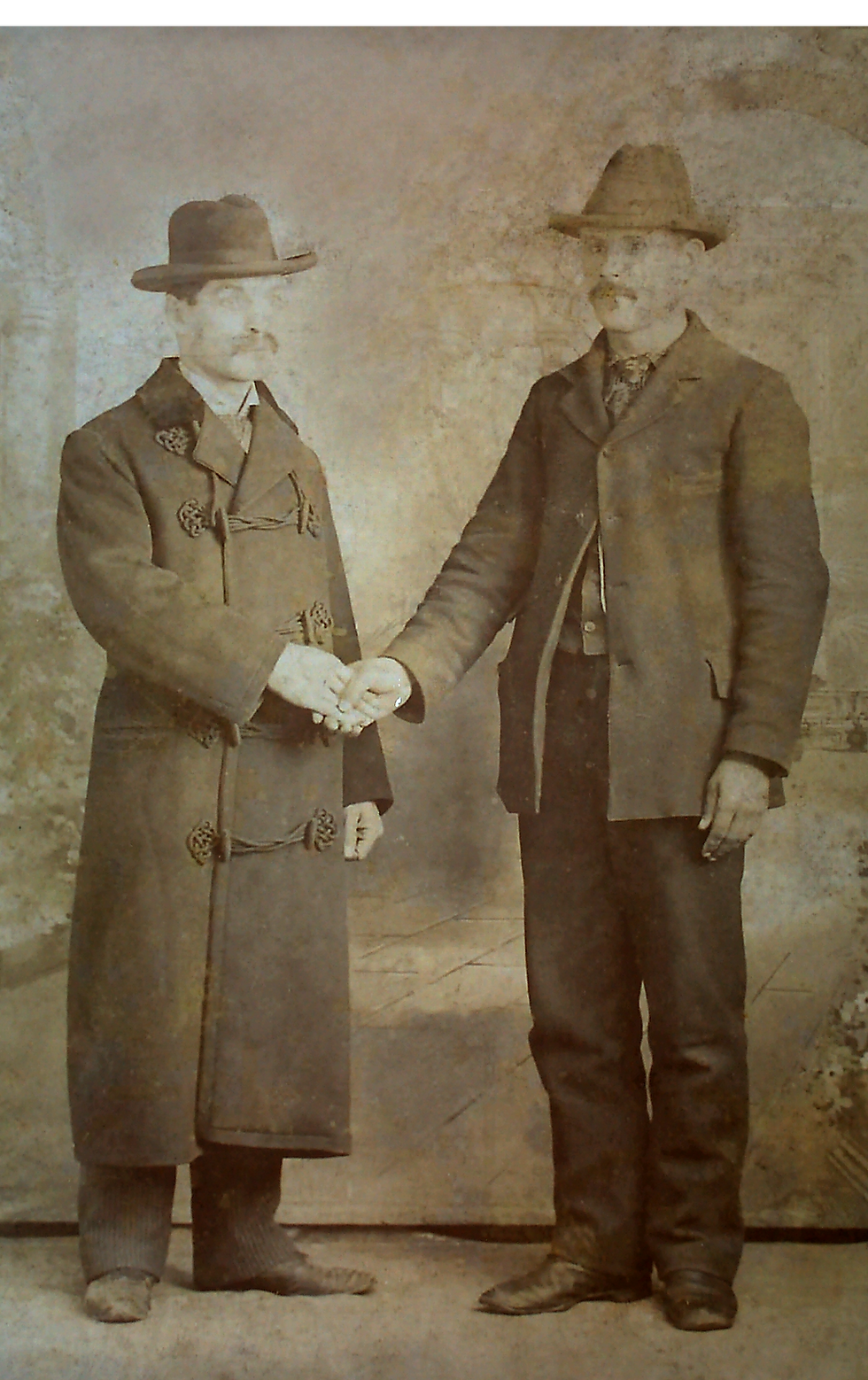
Among them was Louis "Lipp" Shank.
Lipp Shank Builds a Life in Portland
Lipp had been born in 1861, in Poland, then part of the Russian Empire. By the time the Painted Woods experiment came to an end, he had already crossed an ocean and spent years on the Dakota prairie. Like many immigrants of his generation, he did not stay in one place for long.
The frontier continued to pull him west. By the late nineteenth century, Lipp had settled in Oregon, eventually making Portland his home. There he began building a life that looked very different from the one he had known in Eastern Europe or on the Dakota prairie.
He worked first as a carpenter, helping shape the growing city. Later he entered the fur and hide trade, purchasing hides, wool, and furs and shipping them from eastern Oregon. For a time he even operated a dry goods store from a wagon, traveling through rural communities and bringing supplies to places where permanent stores had not yet appeared. It was the kind of entrepreneurial work that defined much of the American West.
"The Mayor of South Portland"
In Portland's South End, Lipp became widely known. He had a reputation for energy, humor, and community spirit. Neighbors came to rely on him not only as a businessman but as a civic leader, and friends jokingly referred to him as "the mayor of South Portland."
That reputation extended beyond business and civic life. Family accounts suggest that Lipp was the kind of person who made space for others as they arrived. When relatives came to Portland from Russia, he helped welcome them and ease their transition into a new country. In a city that was still taking shape, that kind of support could make all the difference.
Lipp had married Anna Herman in 1882, though the exact place and timing of their marriage within his migration are unclear.

Together they raised a large family while watching Portland grow from a developing western town into a thriving city. Their home became part of a vibrant Jewish community that was establishing synagogues, businesses, charitable institutions, and social organizations throughout the city.
By 1931, Lipp and Anna had built a life that spanned half a century. In October 1931, friends and family gathered at their Portland home to celebrate their golden wedding anniversary. More than forty guests attended the dinner celebration, including children, grandchildren, neighbors, and friends who had shared the long journey of their lives.
Building Community
As the Jewish population of Portland expanded, community leaders recognized a new challenge. Many elderly immigrants had arrived in America late in life and had no extended family nearby to care for them. The solution was the creation of the Jewish Home for the Aged.
Lipp Shank became deeply involved in the effort. He served as president of Congregation Neveh Zedek in 1916, one of Portland's most important Jewish congregations. Later, from 1921 to 1923, he served as president of the Jewish Home for the Aged, helping guide the institution during its early years.
Lipp was active in both the Jewish community and the broader civic life of Portland. For a man who had once struggled through winters on the Dakota prairie, it was an extraordinary transformation.
The Final Chapter
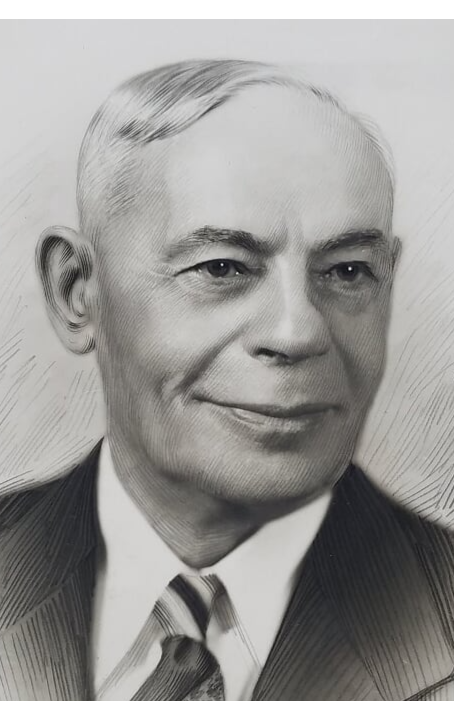
Lipp Shank lived nearly ninety-two years. When he died in Portland on September 14, 1953, one day before his ninety-second birthday, newspapers reflected on a life that stretched across continents and generations. He had been born in Poland, crossed the Atlantic as a young immigrant, endured the winters of Dakota Territory, and spent decades helping shape the civic and Jewish life of Portland.
He was laid to rest in Neveh Zedek Cemetery alongside Israel and Mollie, not far from the city where he had built his life, as the family continued to grow.
The Generations That Followed
The family of Lipp and Anna stayed rooted in Portland, while other branches spread further west. Mike eventually settled in Washington, Rae remained in Portland, and Mary’s path led her to Cleveland. Each of them carried forward the same story that began long before any of them were born.
That story continues to unfold across generations. From Poland to the prairie to Portland, and beyond...
Discover your roots with Trista the Genealogist, where family history meets fun. I'll make learning your family's stories exciting, inspiring, and accessible, creating a unique connection to your past and a lasting legacy for your family. Contact me for information about how I can help connect you with your roots at tristathegenealogist.com!


Comments